Showing posts with label Lean-Startup. Show all posts

20 August 2011

Agile Adaptations

I've been following the Lean-Startup movement since I wrote about it in Framing Product Development. In the Spring of 2010 I was jazzed up about Lean-Startup following a gathering at DevJam with a small group of friends where we viewed a simulcast of the Startup Lessons Learned Conference --the brain child of Eric Ries.

Yesterday I tweeted:


Several RT'd. Others commented about this distillation of ideas.

My Admission


 My Tweet was cribbed from Abby Fichtner's (a.k.a., Hacker Chick) screencast Pushing Agile to the Next Level. The side by side comparison of Agile and Lean Startup (below) is a concise and helpful representation of an evolution of thinking in the Agile software development realm.


Of Hacker Chicks's excellent slide and presentation, I pass on Alan Cooper's tweet - ostensibly directed at her vision of the evolution of the Agile movement...
Most accurate, succinct, and wise demarcation of the two disciplines.Alan Cooper
Agile 2.0

I share Hacker Chick's vision. For me Lean-Startup has become Agile 2.0. True to the spirit of Agile, movements must adapt and adopt, or die. I recognize that Hacker Chick has shown the Agile community a bridge to the future. The challenge for any ponderous old-paradigm organization producing custom software products is
How to behave like a startup?
Lean-Startup teaches us to create the infrastructure necessary to test our business models (our products). That means getting it into the hands of the users, testing hypotheses (fail early / fail often), and pivoting toward viability -- like a heat-seeking missile follows heat.


Previous Posts About Lean-Startup For those new to Lean-Startup, I've written several posts on my understanding the constituent principles:

07 November 2010

The UX of Desire

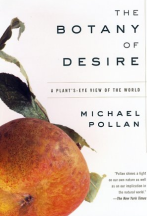
The Botany of Desire by Michael Pollan gives a compelling perspective on how desirability determines viability and how plant species have thrived by co-evolving with humans. Michael Pollan's insights are wildly applicable to software User Experience (UX).

Pollan begins with the premise
Design in nature is but a concatenation of accidents, culled by natural selection until the result is so beautiful or effective as to seem a miracle of purpose.
He demonstrates how four plants have survived through adaptation, and have ultimately thrived by capitalizing on human desires and needs:
  • The Apple - exemplifies our desire for sweetness & intoxication (apple jack),
  • The Tulip - exemplifies our desire for beauty,
  • Marijuana - exemplifies our desire for pleasure, and
  • The Potato - exemplifies our need for sustenance.

Human Desire & Software

Facebook grew from an idea in a Harvard dorm room to over 500 million active users in a hand-full of years (cf. Facebook Timeline). My hunch is that Facebook's popularity is based on its appeal to human behavior and its fulfillment of human desires. That is, by tugging at our narcissism, our curiosity and our instinct to connect with others, Facebook enables us:
  • to know what our friends, and would-be friends, are saying & doing, 
  • to surreptitiously learn more about particular love interests, 
  • to be flirtatious within a socially removed virtual cocoon, or simply 
  • to be noticed.

The Botany of Desire reversed my bias about humans domesticating plants like corn or apples or cotton. Perhaps it was the other way around - could it be that the plants domesticated us? Plants have, at the very least, used humans to co-evolve and thrive.

I now think of my killer app as a "species" co-evolving with humans. Future startup software might well have to be every bit as cunning as a Venus Flytrap. Our software must provide the sensory lures, then deliver on needs. Future apps might well be like successful plants -- spawned by and grown by adaptively fulfilling specific human needs in a survival-of-the-fittest environment.

The Lean-Startup approach seems a fitting platform for the evolutionary experimenting that future killer apps might require. Lean-Startup is rooted in the principle of iteratively adapting and refining a business model (i.e., an evolutionary concept), based on proving the viability of features (meeting needs that customers desire).

INot only will killer apps have to provide features and fulfill needs, they will also have to present desire fulfillment in an alluringly positive experience not unlike a flower's nectar lures and intoxicates a honey bee to better serve the flower's ongoing reproductive purpose.

The UX of Desire means attracting and delivering (...so beautiful and so effective) as if the life of your app depended on it!